 Gustaf's Journey

Lucia: light in the long night
In Swedish, ljus means both light and candle, and Lucia is all about both. Under the old calendar, Lucia night was the longest night of the whole year. People stayed awake to keep watch over the farm and the animals, and young people dressed up and went from farm to farm, singing for a bite to eat.
The Lucia we know today, in a white gown with a red sash and candles in her hair, began around Lake Vänern in western Sweden in the late 1700s, and the custom spread slowly. She comes early in the morning, bringing light before the sun is up. Her attendants, the tärnor, wear white too, with candles in their hands, and star boys walk in the procession in tall pointed hats.
The Lucia treat is lussekatter: saffron buns, often curled into an S with raisins. Swedish-Americans still celebrate Lucia today, from Minneapolis to Bemidji.
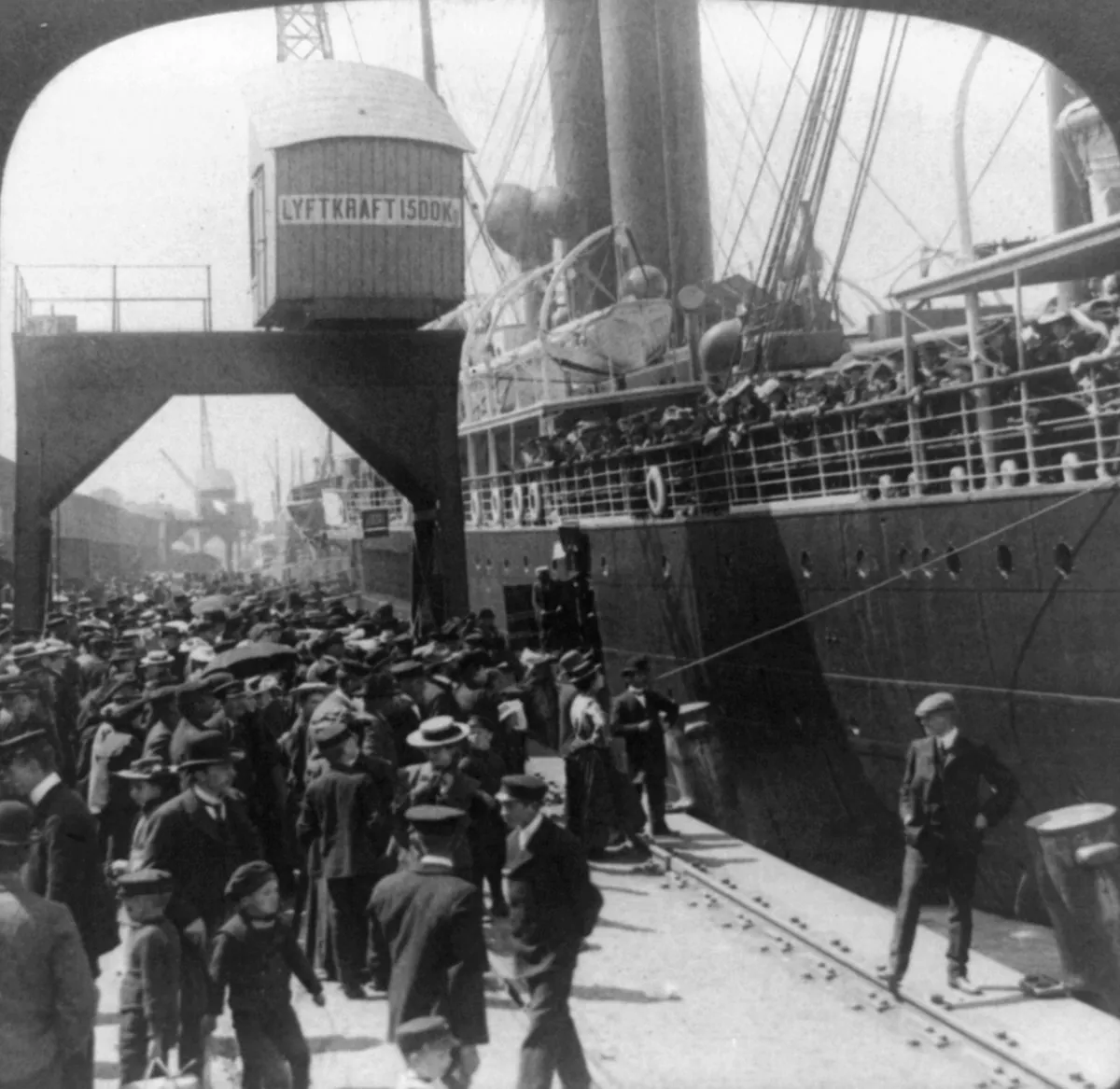
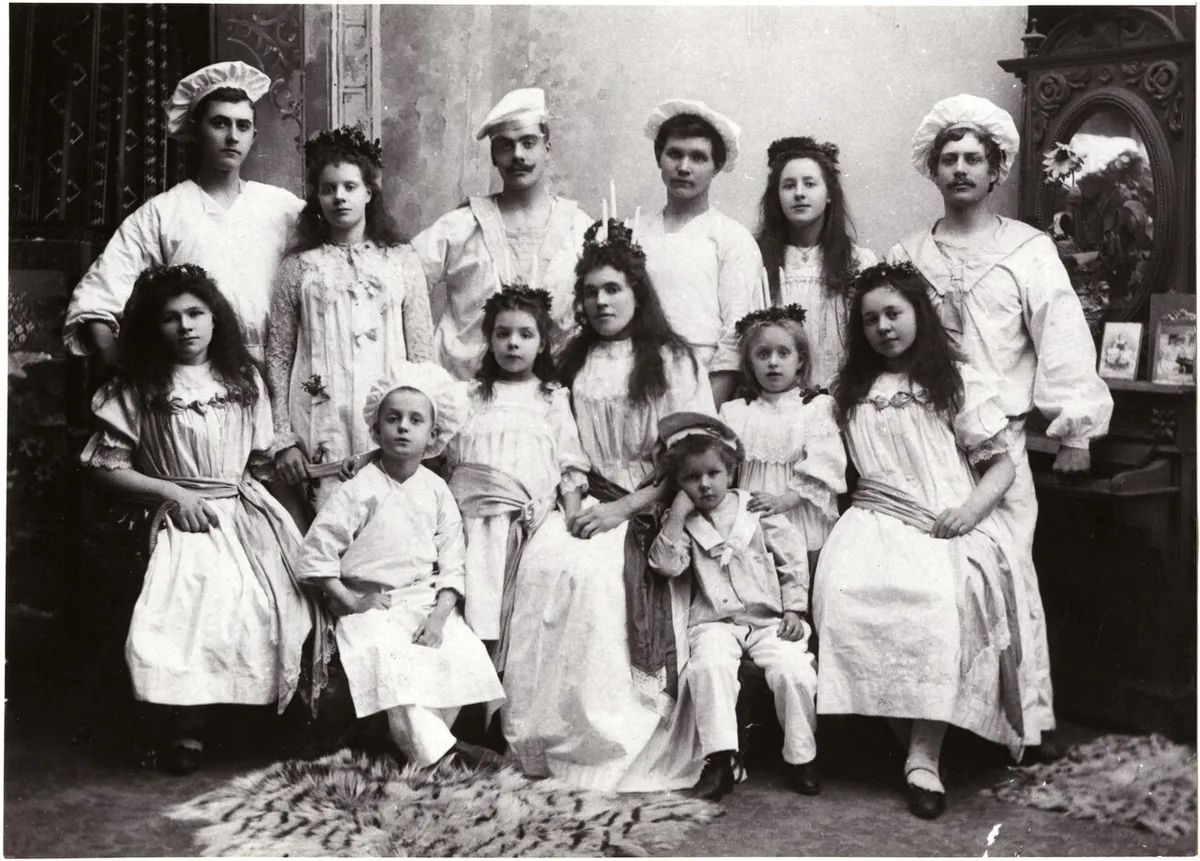 About 1900
 In the game
Gingerbread and the Christmas goat
Pepparkakor are thin, crisp gingerbread biscuits, cut into hearts, stars and pigs. They are mentioned at a Swedish convent as early as 1444.
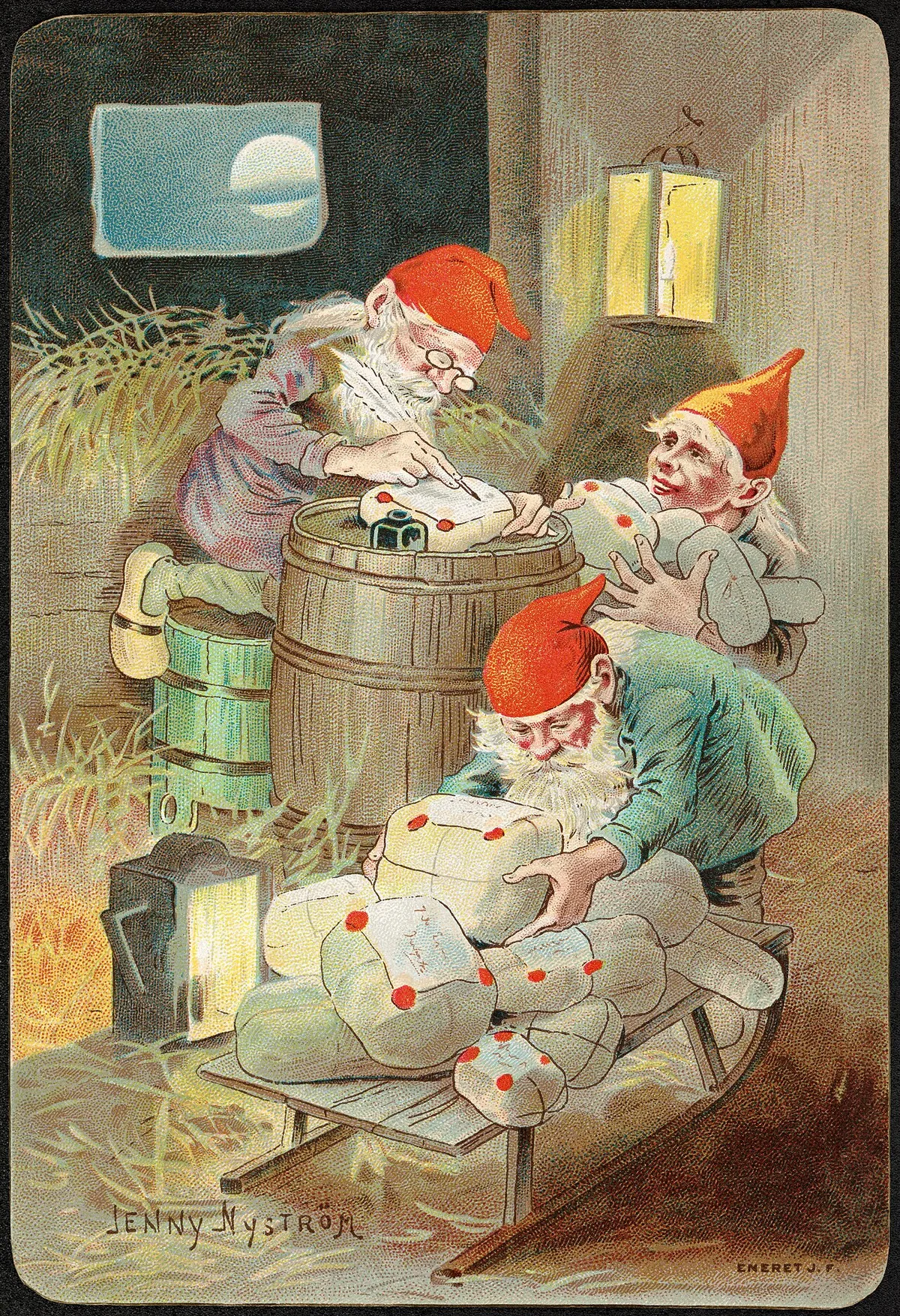
The julbock is a Christmas goat made of straw. Before Santa Claus came along, it was the Christmas goat who brought the presents.
24 DecemberChristmas Eve, the big day
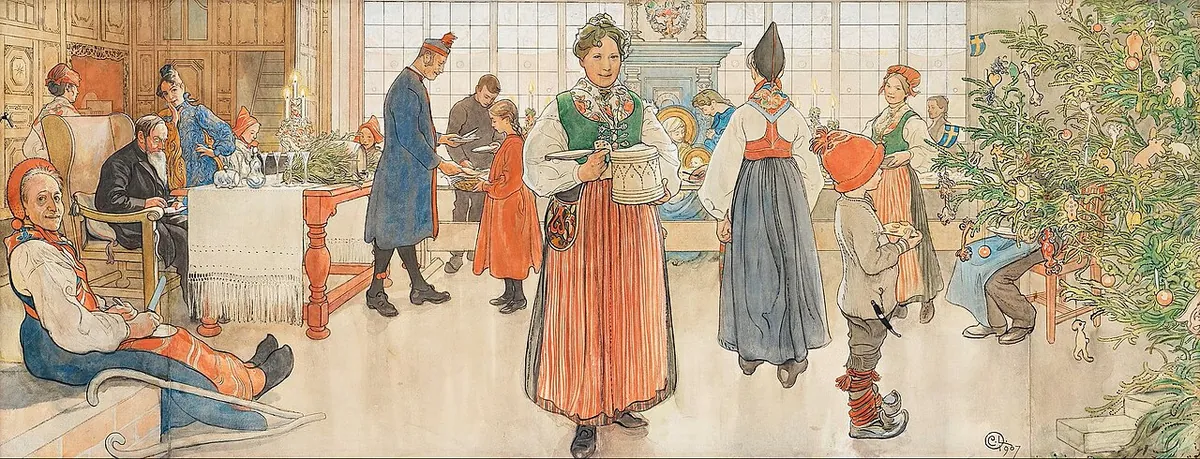
In Sweden the big day is Christmas Eve. The julbord, the Christmas table, is full: ham, sausages, lutfisk, fresh bread and cheese. The ham is boiled, coated with mustard, egg and breadcrumbs and browned in the oven, and the family dips bread in the broth from the pot. Swedes call it dopp i grytan, dip in the pot.
Then comes creamy rice porridge with cinnamon. One almond is hidden in the pot, and whoever finds it, people say, will marry within the year.
Julotta: church before dawn
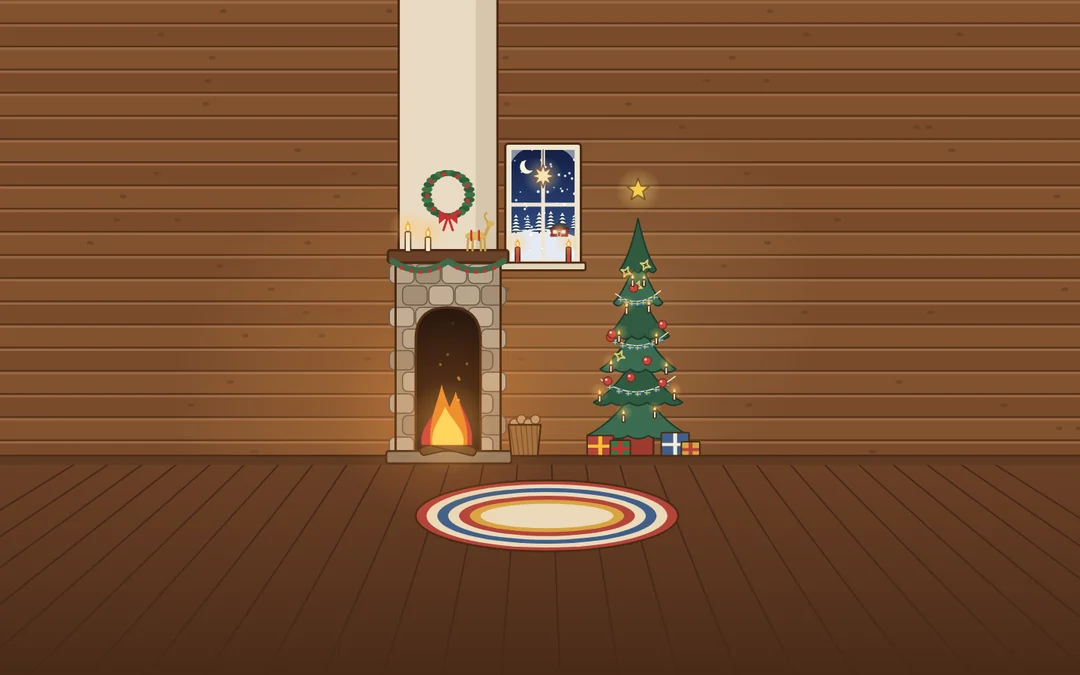
In Gustaf's childhood in Mora, the whole village set off for church by sleigh long before dawn on Christmas morning, carrying burning torches through the dark. The early service was called julotta. Outside the church, people threw their torches into a big pile, and the fire lit up the snow.
Afterwards everyone raced home by sleigh. People said that whoever got home first would get their harvest in first, too.
A Swedish Christmas in Minnesota
The emigrants brought Christmas with them. In Gustaf's Minnesota there was lutfisk and rice porridge at Christmas, and before dawn the whole family drove to julotta by sleigh, just like in Mora.
In Mora, Minnesota, the Lutheran church held a lutfisk supper every December, and half the county came: Swedes, Norwegians and neighbours alike. Lutfisk is dried cod soaked in lye for days and then in water. Cooked, it is soft and wobbles a little. Swedish-Americans like their lutfisk with allspice, while Norwegian-Americans often eat it plain with butter.
The tree was decorated the Swedish way, with straw stars and red apples, and the American grandchildren added shiny tinsel.

Saint Knut's Day: Christmas is over
On 13 January, Saint Knut's Day, Swedes dance round the tree one last time and carry it out. Christmas is over for another year.
Sources
The facts on this page come from the game's "Did you know?" cards, which are checked against sources like these:
- Saint Lucy's Day (Wikipedia)
- Christmas in Sweden (Wikipedia)
- Yule goat (Wikipedia)
- Tomte (Wikipedia)
- Jenny Nyström (Wikipedia)
- Lutefisk (Wikipedia)
- Saint Knut's Day (Wikipedia)
- Carl Larsson (Wikipedia)
Celebrate with Gustaf
In Gustaf's Journey, the Lucia journey runs from 1 to 15 December and Christmas in Two Moras from 16 December to 13 January. Each has 12 levels, its own story and a new outfit for Kantis: a crown of candles for Lucia and a red tomte hat for Christmas. They open once you've finished your first 5 levels.
- ljus light, candle
- lussekatt saffron bun
- julbord Christmas table
- tomte farm gnome
- julotta early Christmas service
More words on our page of Swedish words and meanings.
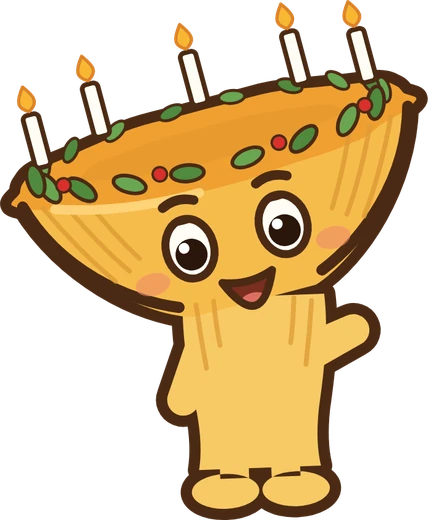
God Jul from Gustaf and Kantis
Two Christmas journeys in a cozy crossword game. Free on iPhone and iPad.